This document can be downloaded from here.
Stopping
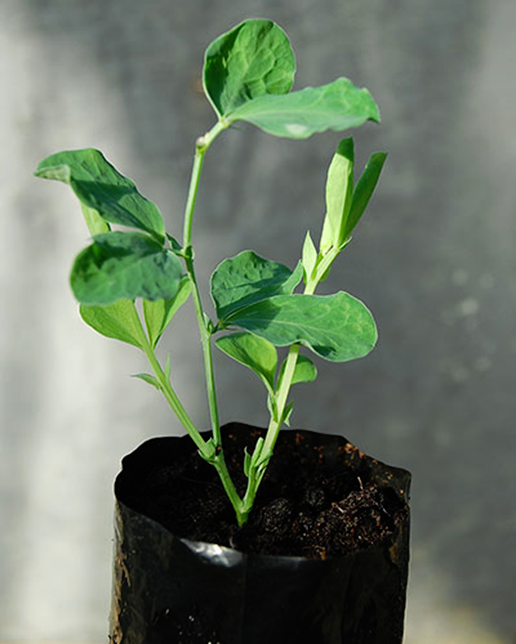
If you started your plants last autumn, you will probably have already pinched out the growing tip. If you left them to grow, it doesn’t really matter, as they will probably be producing side shoots naturally by now, but you should pinch out the primary stem before planting out.
Spring sown plants should have the growing tips of the primary stem pinched out after two pairs of leaves have been produced, to ensure the development of side shoots.
Plant pinched out showing side shoots
Where to plant your sweet peas
Sweet peas need an open sunny spot to grow and flower well.
If you want to enter your sweet peas in the show, you will need space to grow 1 plant per cane using the cordon method, with the canes about 20 cm (8” apart) and usually in rows.
If you are growing for flowers in the garden/borders, they are usually grown in a wigwam style arrangement with 2 plants per cane, and you will need to leave a bit of space for the plants to bush out. You can also use peas sticks or grow them over shrubs.
Whichever system you use, put the canes in place before you plant out your seedlings. You will need to use 8 foot canes, as the plants can also grow much taller than the usual expected height of 2m (6½ft). Supports should be about 20 cm apart.
Planting out
Autumn-sown plants should be planted out about mid-March and spring sown a month or so later, but it does depend on the weather. If it is very cold and/or wet, leave it a bit longer. Also, seedlings don’t like cold drying winds.
Individual plants should be placed in holes and the soil level brought back to a level below the first side shoot and planted firmly but lightly to ensure good soil contact.
• Harden the plants off if necessary for 10 -14 days before planting out.
• Water your plants before planting so that the roots have been fully wetted.
• Ease seedlings out of pots or modules, taking care not to crush or snap the stems.
• Space plants about 20 cm apart
• Position climbing plants close to their intended support – about 5-7.5cm (2-3in)
• Plant 1 seedling per cane for the cordon method, 2 per cane if growing up a wigwam.
• Water again immediately after planting to settle the soil around the roots.
• A thick mulch of organic matter added to the soil surface, if possible, will help retain moisture in the ground and deter weeds.
Young plants are very attractive to slugs and snails They can also suffer from animals digging round them, particularly on the allotment, so it is helpful to give some protection until they are established.
Ongoing care and training
Cordons
If you want to enter your sweet peas into the show, you should grow using the cordon method. It is the same principle as growing cordon tomatoes.
This is the most important point about growing for showing your sweet peas because this method makes the plant concentrate its energies on the blooms, producing long stems and 4 florets per stem.
When the side shoots on the seedlings are about 20 cm long decide which is the strongest stem (not necessarily the longest) and then remove all other side shoots and the original primary stem.
Keep pinching out all the tendrils and any other sideshoots as they develop, so just one main stem grows. When the plants are growing strongly, this will need to be done at a couple of times a week, sometimes more!
Tie the main stem into the supporting cane about every 10-15 cm using garden twine or sweet pea rings. This is essential, because without tendrils the plant cannot support itself.
.
For garden growing
Non-cordon plants grown more for garden decoration need less intensive care but still need tying in initially as the side branches develop and perhaps a little thinning out.
Tie new shoots of climbing plants to the canes, pea sticks, netting, trellis or shoots of shrubs they will be growing up, using garden twine or sweet pea support rings.
Tendrils in contact with supports will naturally begin to grip on but keep tying in new shoots if they are wayward or in danger of breaking.
They can be grown in large pots but will need careful watering
Removing some side shoots as they grow will encourage bigger blooms.
Watering
Plants won’t flower so well if they dry out, so check those in the ground every 3-4 days in dry weather, and those in pots daily. Apply enough water to wet the full depth of roots each time you water.
Flowering and deadheading
The first flowers may only have 1 or 2 florets, but more will develop soon after. When flowering begins, pick or remove dead flower heads as often as possible. This is particularly important for annual sweet peas, as they will stop flowering if seedpods are allowed to develop.
Feeding
Sweet peas plants fix nitrogen from the atmosphere so very little feeding is necessary for plants grown in the ground. If you do think they need anything extra, use products high in potash and phosphate to encourage flowers rather than green growth, and use sparingly.
Plants in containers will benefit from feeding with a high potassium fertiliser, such as tomato feed to encourage flowering.
Problems
Sweet peas don’t suffer from many problems, and they are not too serious:
• Seedlings may grow weak and leggy, which is caused by insufficient light and too much warmth. If this occurs, move seedlings to a cooler and brighter spot.
• Protect young plants from slugs and snails.
• Protect young plants if significant temperature drop is forecast and always harden off indoor raised plants before planting out.
• A grey leaf covering is caused by powdery mildew, made worse by drought or insufficient watering. It tends to happen later in the season.
• Aphids will suck sap, particularly around the shoot and flower tips.
• Plant viruses do occur, but it isn’t particularly common.
• Drought and temperature stress causes scorched foliage and bud drop.
• There’s not much you can do in hot weather (over 30°C), other than keeping plants well watered, but flowering usually improves again after the hot spell. Water during dry weather and avoid getting the foliage and blossom wet.
• Dense clusters of distorted leafy shoots, often close to ground level, are leafy gall – nothing can be done about it, but it isn’t common.